Why bosses should use social media to earn your trust

I have just been reading an article that suggests everyone’s boss should be on social media. If your manager is not using social media, the report suggests that you’ll trust them less and can’t buy anything from their brand (that is, your employer).

This strikes me as a very intriguing idea because my bosses have always used social media since the concept emerged. But I am around people elsewhere in my life who are yet to understand it, try it, or have their own workplace embrace social media.

Many bosses still consider social media something for early adopters, gen-y or simply a time-waster.

Of course, if you don’t use social media, you won’t respect a leader more because they do. However, to the extent that social media is a valuable tool and a major player in reputation management these days, an organisation which includes communication and isn’t engaging with social media is opening up numerous areas for it to unravel.

The head of the ABC, Mark Scott, is an excellent example of a leader who shows how it’s done. Anyone employed at the ABC can see from Mark’s tweets that it’s safe to share comments, joke, converse with all number of people… within reason.

Why is it that in any new job you are given an e-mail address expected to use it yet no employer is, as far as I know, asking people to use a Twitter account or encouraged to post publicly via their Facebook URL.

It’s not too early if you work at a design company to start asking employees to join Pinterest or if you’re in business to sign up for a Linked In account.

If your employees are happy, why would you be concerned about offering the public an extra point of contact for your organisation. We all know that social media is a perfect way to extend the reach of your publicity strategy and employees are probably your greatest supporters when it comes to sharing positive messages about your brand products or service.

As for trusting your boss more because he or she uses social media; I think that most of us acknowledge that transparency works and builds relationships. Your family, friends and employees know this and acknowledge it by their honesty online – so why should management be any different?

Related links

Mediafunnel: How to persuade your boss to use social media
Linked In: Social media – Trust is everything

AFR: Business commits to social despite false starts

Original BrandFOG report

News media using Instagram

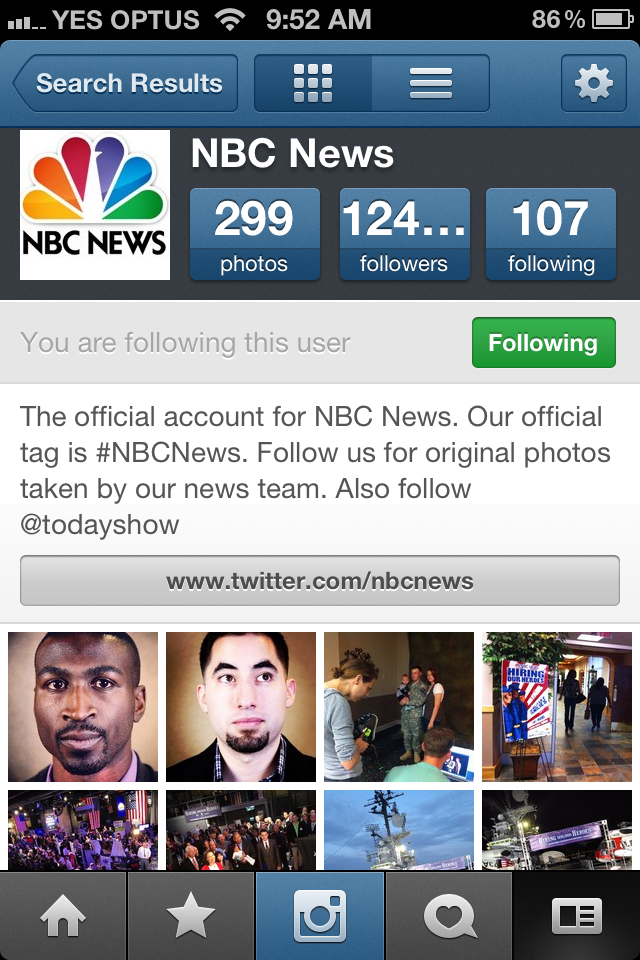
NBC News are often at the forefront of social media for broadcasters, and their 124k followers shows that they are giving Instagram enough time and effort.

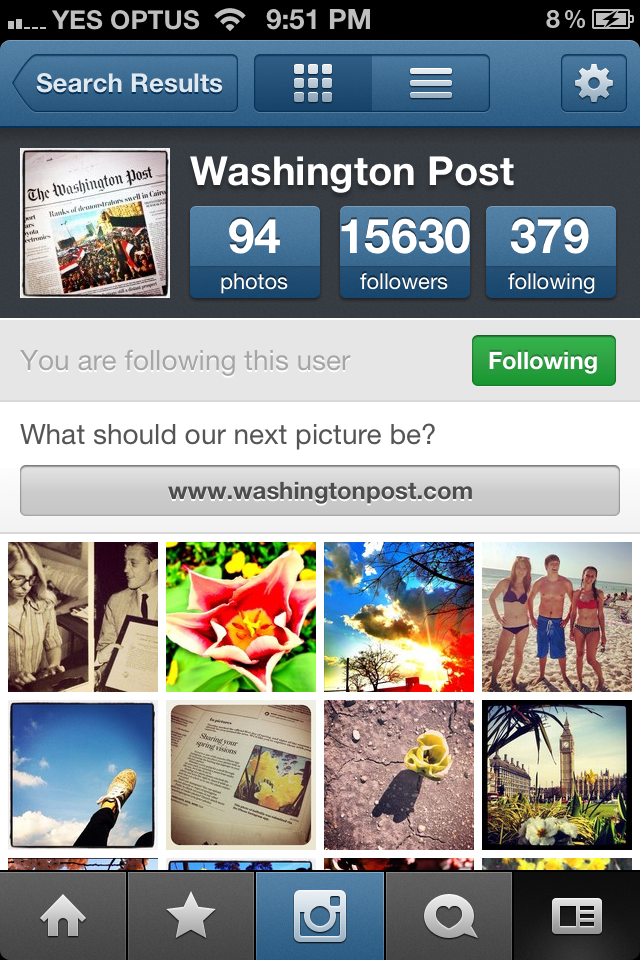
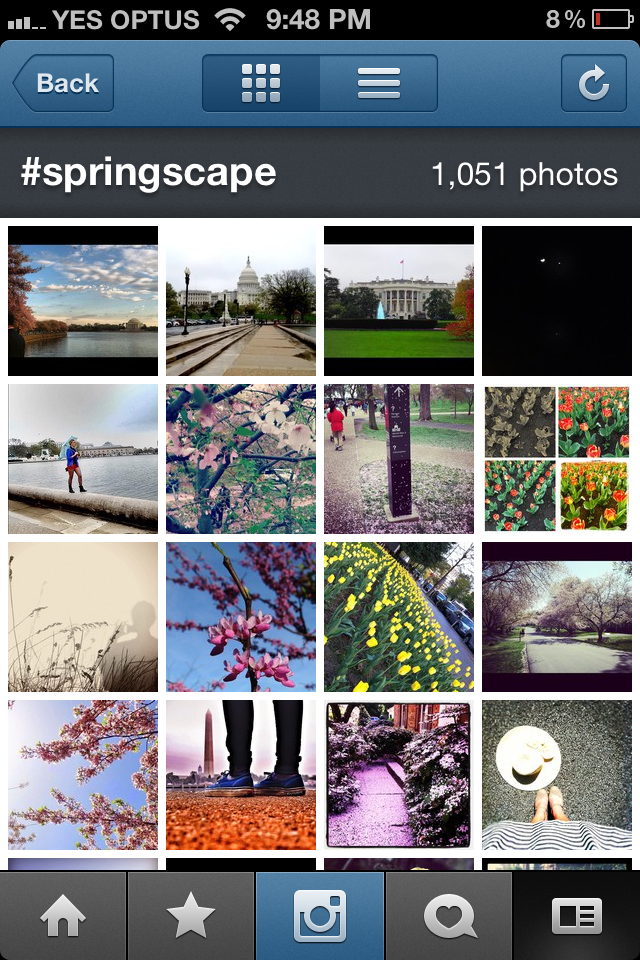
Washington Post are getting creative, drawing in readers who love the app (and love the end of a cold American winter).

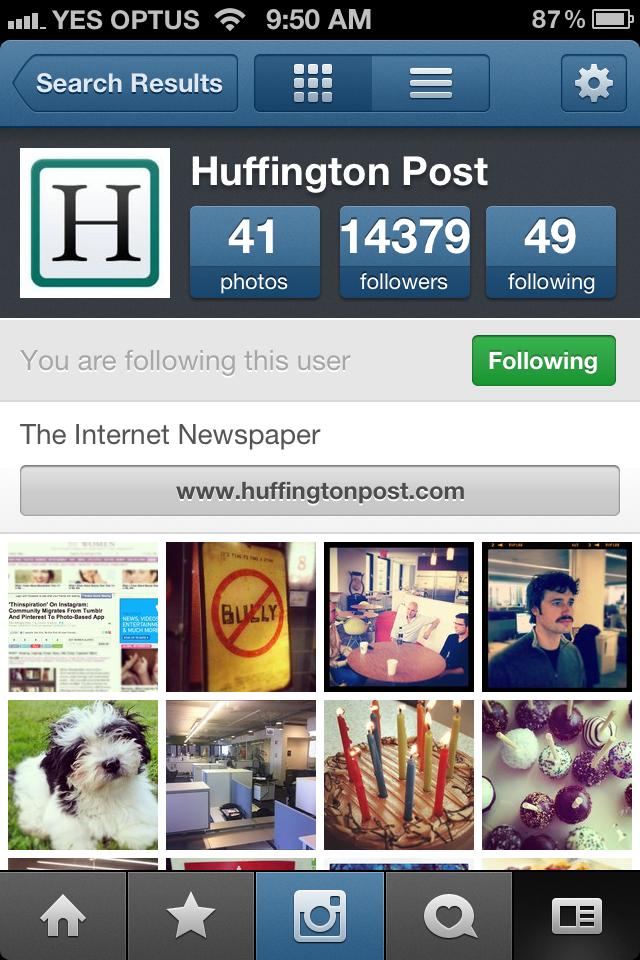
Only the Huffington Post – The Internet Newspaper, as they call themselves – aren’t doing as well at engaging the millions of photo-addicted mobile users.

41 photos for 14k followers, suggests they could do a lot better with more engagement.

Why I don’t bother with Tweetdeck

I cannot fathom what is going on at Twitter.

Millions of dollars flowing their way, adulation, sponsorships and the chance to recruit masters of user interface design and HTML5.

Yet the app they bought, Tweetdeck, is floundering terribly.

In my job, I train TV staff and recommend to a range of journalists and TV producers on what apps they hsould use for navigating Twitter.

My first comments are;

1) Don’t use the Twitter website if you can help it.

2) Don’t download the latest version of Tweetdeck.

Yet, as a social media manager, I have no great option with which to use Twitter on a PC desktop machine.

Yes, Hootsuite.com is getting ne by – and saves anyone who can’t install an app on their work PC – but my point is that Twitter, by purchasing Tweetdeck, was supposed to improve it into the killer app it should be. Instead it is has faltered at nearly every turn.

Oh how I despise it. Let me count the ways…

1) I can’t trust the schedule function, It regularly posts tweets immediately, not at prescribed times.

2) I cannot add someone to a list (this was available in a previous version)

3) I must add an entire column/feed of an user in order to access an individual tweet’s details.

4) The black background is not everyone’s cup of tea. It was cool for a while but now the contrast makes me squint and my OHS advisor agrees. So there.

5) The Chrome version fails to link to it’s own extension in the left-click option ‘Share this via Tweetdeck’

6) I cannot remove some accounts I no longer use. They reappear every time I reopen the app in some kind of mystical syncing debacle I am not privy to.

7) I cannot choose from which account I am favouriting a tweet or following a user.

8) The iPhone app has always been intolerable and the latest iteration does little to help it comete with stable, speedy options like @tweetbot

9) All these people agree with me

10) No threaded conversations? Or, only when it wants to show them. Pfft

11) I’m given a set number of columns or to get to the adjacent column I have to switch to a new three? No.

12) Adobe Air. It’s a daft idea to think I should keep approving updates to a secondary program I don’t really need. And its adds substantially to Tweetdeck’s reputation as a ‘memory hog’ slowing down your whole computer.

But like in the Bible and in all good Harry Potter books, there is hope….

You can download the old Tweetdeck!

Or, as I mentioned, try Hootsuite, a web-based version that actually does a lot more – perhaps too much – and it does it efficiently. There are many reasons to switch, but as I tell staff who are new to Twitter, don’t even try Tweetdeck out to begin with.

Is it salvageable? Of course. If they stripped it back to what it could do well to begin with – multiple feeds that are searchable – and add on features that other top apps now include, Tweetdeck could bounce back.

Is this likely? I don’t think so. Have you seen the latest range of changes Twitter brought to its own website? Connect/Discover/Whatever…

Costco – but at what cost?

Visiting Costco took more gusto than I could previously muster. But today, under the mistaken idea that the big-box store sold dishwashers, I headed into the fray.
I left thirty minutes later, concerned for our society, empty-handed and with bruised ankles.
Here’s how it went down…
1) Entering the carpark on a rain Friday at noon… I discover this is apparently the peak period for masses of adults dressed in smart casual to go bulk shopping in SUVs .
2) I find a car spot and a mega trolley. Costco trolleys are made to carry a month of shopping and a flat-screen TV. And I saw this proved time and time again. It also straps in two children and there’s room for two more. I also saw this fact proved. “Look how big their family is!” My 3-year-old said. And there they were, mum pushing all four kids in one trolley.
3) Entering the building is my first challenge. There are people everywhere but as I watch, none have any discernible direction. There are no signs saying SHOP ENTRANCE so I circle the entire carpark till I am drawn, inexplicably, along with another twenty trolley-pushers, toward what could only be the Death Star.
They all move as one up a long ramp. It feels like Aldi so far, except it’s not to scale.
4) I get inside and there are more trolley traffic jams. As I wait for movement up ahead, I am overtaken several times. It’s as cut-throat as the carpark. At least as shoppers, everyone apologises for ramming each other in the ankles.
Is this supposed to be fun, I wonder? I look around for motivation. Most shoppers look pale and bemused as if this is their regular routine. (If they know how this operates, why did they come in rush hour?) I bypass a woman checking for membership cards. At this point, Costco has gone from supersized Aldi-clone to cult, in my book. I literally whisper “I don’t have one, yet!” And the lady waves me through, explaining where to buy one when I want one. So, why check for cards if you don’t need one? I can only assume it is so that the CCTV operators know which of us to track. I have been marked.
5) As for prices, they are undeniably cheap. I found my TV for $150 cheaper than Bing Lee. Confectionery, coffee machines, dodgy barbecues, they are all 20% cheaper than I’ve seen. I could buy a 4-pack of toothbrushes what I assume is a good price, but who else sells a 4-pack? The same goes for a 500g pack of Doritos. Who ever wanted that much?
Sure, you could get back the $60 cost of membership in one vist, no worries, but it’s certainly easier the happier you are to suspend the belief that you can have too much of a good thing.
6) I told my kids to watch our for who has the fullest trolley. And there were many contenders. If you ever go to Costco, I urge you to play it. Over-consumption is out of control. I understand this could be a monthly trip for some, but seriously, if they offered bigger trolleys, I do think people would fill those too. The only reason I think some shoppers stopped, was because they’d have to leave a passenger behind to fit any more in.
7) I was consumed, but mostly by the scale of the place. They import it, put it on the shelf, it goes home in a huge trolley. If everything can be done this way, why would we need the corner store? Convenience? Cheapness appears to beat convenience, for lots of Costco shoppers.
Naomi Klein’s NO LOGO is a brilliant read on the dangers of Big Box stores and how they have killed off many small retailers across middle America. The true sadness is the service. We are substituting any personal touch for an extra 10% off. The man who owns the store with his son stacking the shelves is replaced by a nameless, apathetic salesman who’s real task is primary task is to maintain order while avoiding eye contact.
I talked to a staffmember – most of whom stand idly by, hoping not to be consulted, just like at Bunnings – who told me that while they didn’t offer dishwashers of ovens yet, they would soon. “They’ve really only just opened. They’re look into all of that,” he said. “Plus, they’re opening a new Costco at Casula, and that one will be bigger!”
Oh boy.
My father used to have a card for Campbell’s Cash and Carry. There were myths around about how cheap it was. In reality, my dad was just getting paper plates in bulk. Those were the days.
8) As I tried to leave, I did another circle of the carpark, unable to find my car. Then, I noticed the shopper ahead of me struggling badly with his trolley. As I got closer, I realised that the pathway, built to provide safe passage around the moving cars, included posts every few metres that made the path about two inches too narrow to allow the mega-trolleys to pass through.
The irony of inconvenience was too much. I gleefully dumped my trolley and headed home.

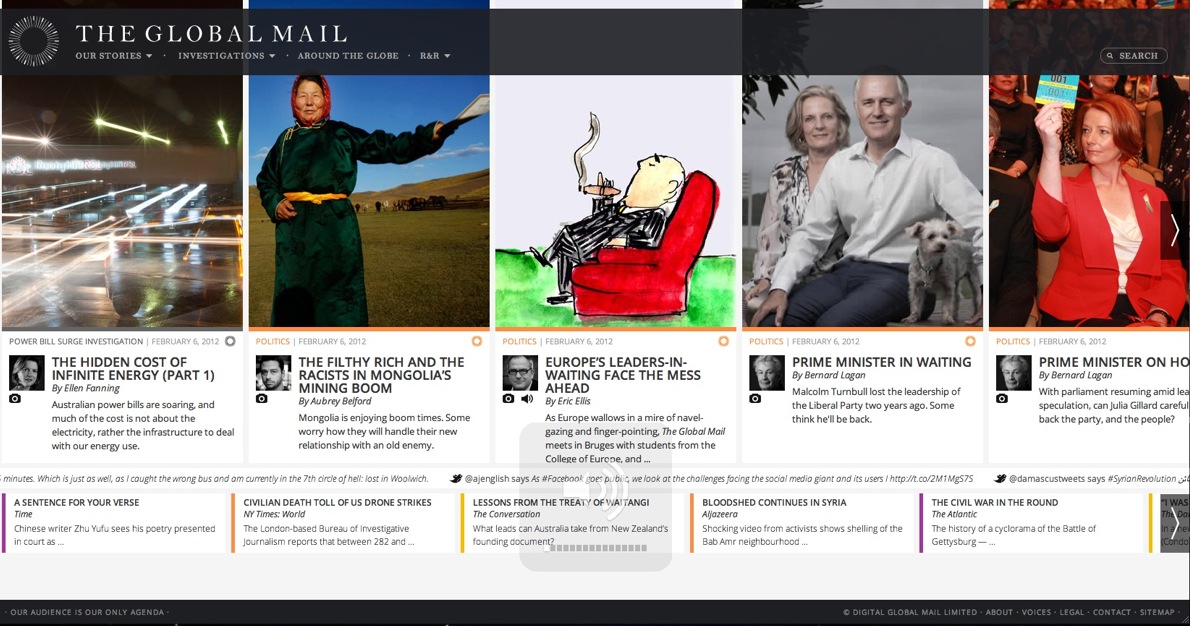
Gripes of wrath – My first look at The Global Mail

I was up late so I switched on the new Australian bastion of Independent Journalism, The Global Mail (TGM).

The website only went live last night but after twenty minutes or so I felt I had a good enough grasp of their plans to share my thoughts. And all my thoughts were about sharing. Because that’s what we do.

During the next day, today, I have seen some nastier reviews of TGM. This kind of spontaneous chatter, the fleeting engagement that social media elevates into conversation is still worthwhile and I am confident the editors won’t see the negatives as carping but as people wanting to be proud of a standout moment in our media culture, to make a good thing great.

My email to the editor went something like this.

Hello,
Thanks for launching your new venture – it has already kept me up past midnight so that can’t be a bad thing.

Having read a few articles, each of which I appreciated, I found myself wanting more, more links to topics raised, more options for looking at the source material and a chance to delve further into the life of the author. Sadly, none of these options are present on your site. My hopes were that TGM would bring a fresh new look to independent storytelling – which it does, I am enjoying the interface and typesetting – but also that it would nail the sharing mentality that is now spearheaded by social media. As for me and my generation, this is how we consume media; it is second nature to ping our friends as we read a story, to tweet a thought, to grab a quote (preferably out of context) or to drag a photo to show our followers.

I hope that your site is already aware of these trends and plans to roll out such solutions in coming weeks. It is, after all, our first night together and I realise it’s unfair expecting everything to be just right.

So, how about it? How about a Google+ button, hyperlinked issues within stories, article tags and photos that link to more photos from that event or photographer. Right now TGM feels to me like a broadsheet copied onto a website.

I look forward to seeing where else you take it – and where I can take it.

Cheers, Luke.

Best tweets from #BDO (#BigDayOut 2012) so far….

The Big Day Out is, for many youths and music fans, an unrivalled day of Australianising – a chance to yell things only Aussies understand loudly and in any direction. The event appeals, primarily, to bronzed, boozed, southern-cross-tattooed teenagers.

And now, Twitter has given this much-maligned but witty bunch the perfect platform for their straight talking.

I promise to update this as #BigDayOut heads around the country…
(Well, I might.)

https://twitter.com/quarter_window/status/161011051498971137
https://twitter.com/biancaamariaa/status/160952653831090176
https://twitter.com/jaaaaaaaacob/status/160904900803440640

402866_10150632268662489_596022488_11519302_1174569486_n.jpg

http://a6.sphotos.ak.fbcdn.net/hphotos-ak-ash4/402866_10150632268662489_596022488_11519302_1174569486_n.jpg

@RupertMurdoch already more popular than The @Daily

Rupert Murdoch has tried a few things that did not work.

MySpace, News Of The World, taking his own Twitter profile picture.

However, with just one week of awkward tweets under his belt, @RupertMurdoch has already attracted more followers than his most recent online venture, the digital newspaper made for Ipad, the @Daily.

This shows that The Daily is yet to be fully accepted as a strong media force. The paywall restricts anyone but subscribers from reading most full stories. This is a terrible hindrance to the reach of any breaking news or potentially explosive investigative piece their team files.

This closed model cannot work in a world where the ease of sharing information is paramount, where the integration of social media into every nook and cranny of your daily life is becoming commonplace – e.g. I’ve just noticed my local $2 store has a Facebook page! – and where the next generation of readers’ first instinct is to tell someone about what they have just read or watched online.

As @RupertMurdoch enjoys the kudos of his follower numbers growing exponentially, (and, therefore, his influence) I hope he realises it is only occurring because of retweets, because of the free sharing permitted across other news websites that mention his tweets, and across other platforms like texting and within other social networks like Facebook and Tumblr.

Sadly, these are all elements of a strict paywall model that otherwise exciting forays such as The Daily seems committed to ignoring.

Cinemas are for suckers… like me.

I ventured out to see Mission Impossible: Ghost Protocol, along with thousands of other Aussies this week.

The main reason I went was to be convinced, once again, that despite his oddness, shortness, and proboscis, Tom Cruise, is still fantastic in action films.

Seriously, Cruise gets the same look hanging from the world’s tallest building as does a two-year-old in a sandpit.

But, the cinema experience was slightly betrayed by yet another leap in cinema ticket prices. Prices had even risen since I last saw a film… last month.

$21 per ticket. Twenty-One Dollars.

I can accept Australia’s high taxes as we receive great services. Likewise, I can accept Sydney’s preposterous real estate prices because it’s the best city in the world and supply-demand means I’m going to pay more to live here.

But why, when the prices of DVDs are still tumbling (thanks eBay) and my options to watch films are always increasing (downloads, file-sharing, smart-TVs, Netflix, RedRoom, T-Box streaming) does the cost of seeing a movie continue to rise?

Cinemas have had me annoyed ever since I had to confront the manager at Hoyts in Sydney CBD after I spent an entire Batman film sitting in the floor in the aisle. I was not alone in the aisle. The film was so over-booked there was ten or more of us who slummed it just to see a new release blockbuster.

And that’s not the only madness going on at one of Australia’s biggest movie franchises.

Cinema customers wanting to see a film at Hoyts these days must jump through several hoops that did not used to exist.

1. Plan your night early, allowing time to use the glitzy hoyts.com.au website.
2. First-timers must sign up to the Hoyts Rewards Program, which does offer one free introductory ticket.
3. Pay $21 per ticket for any friends you mistakenly thought to invite.
4. Pay a $1 booking fee per ticket.
5. Print tickets to scan at self-serve cinema.
6. Sell soul to devil to partially replenish your bank account.

Although that is only six points, there are several things wrong with this.

Being an avid user of the internet, I can’t help but use a web-based analogy.

If you had to install a Flash plug-in every time you used a particular website, would you return to that website often?

Or, if you like shopping, imagine you had to call Myer to warn them you were coming, prior to any trip. Absurd.

I certainly recieved a good movie on a big screen with loud sound, but, as the cinemas try to deter illegal downloading of films, what more are the cinemas offering me at this grand event?

They’ve replaced the staff selling tickets with vending machines. The toxic choc-tops are still a ludicrous $5. The chips cost so much I had smuggle in my own Cheezels to save $3. Why do I still put myself through this for two scenes that would still look pretty good on my own 42″ TV, assuming I sit really close?

The screen has been given a special name like Vortex or Mammoth-Vision or something.

This cynical strategy is to hide the fact that as prices have increased, screen sizes have reduced. More films can the be shown more often to more people.

In the industry, it’s probably called “Sucker-Churn”.

(It may also explain why the price of my ticket was $3 more than lat week but the website was unclear.)

Be warned: If your cinema screen is not called Senstadium, Mega-Visiontacular, or some such, be sure it’s barely bigger than your wall at home. And at home, you can put your feet up, make your own popcorn and tell people to keep quiet without risking a fight.

Plus, no one has to sit on the floor.

Top 7 tweets about Kim Jong-il’s death

https://twitter.com/TV_Rev/status/148605678834028545 https://twitter.com/andrewwlaird/status/148605444791861249
https://twitter.com/moldor/status/148608289385627648 https://twitter.com/OmarMash/status/148608906762006528

MORE

My mate Michael Turtle thinks he’s a bit of a travel writer. And he’s right. Read his blog of travels in North Korea.
There’s a great tumblr blog of the countless moments for posterity taken during Kim Jong-il’s reign. It’s called Kim Jong-Il Looking At Things.


The Dictator Trailer (Sacha Baron Cohen)


The Dictator Trailer (Sacha Baron Cohen) – YouTube.

I loved Ali G. He was Sacha Baron Cohen‘s first and best character that let him dissect British culture with the perfect suburban parody.

It also saw him deliver hilariously incisive questions to the oblivious public figures he interviewed.

I didn’t much enjoy Borat with its repeated, childish jokes so I didn’t even bother seeing Bruno.

The Dictator certainly feels more current to international affairs, and with this political slant, I hope it could be a return to Cohen’s best when he combines his social commentary with humour, without resorting to penis jokes.

Having watched the trailer above, do you think you will see The Dictator?