This moiré pattern consists of static fish on a rug and a table with parallel bars. When you walk around it, the fish appear to move. The firm Clarke Hopkins Clarke won a coveted Red Dot design award for it.
Found on Neatorama
go on, invade my privacy.
This moiré pattern consists of static fish on a rug and a table with parallel bars. When you walk around it, the fish appear to move. The firm Clarke Hopkins Clarke won a coveted Red Dot design award for it.
Found on Neatorama
Posted in Design

I have a confused approach to personal security online. I have never used my real name as my Facebook or Twitter handle. Yet, here I am updating a blog, I post photos daily on instagram and my employment details are searchable on Linked In etc..
I tend to think we can’t really win against the data-hungry technology that we need to use if we want to stay connected to others in the this age.
We all keep some things closer than others but it’s ultimately not up to us if some pieces of personal info get out.
I will conceal my children’s identity (there you go, apparently I have kids) but when they start to sign up for things themselves – hopefully not until they are teenagers – I am certain their online ‘privacy’ will all but disappear.
Anonymity is over.
As I drove around Sydney’s inner west this last week, doing what I regularly do, just taking photos of the best and most typical architecture for a Facebook album I keep, I came across a home that I really wanted to know more about. It’s mudbrick, largely concealed from the street, and, from what I have learned from books, from watching Grand Designs, and from living in the Blue Mountains, I could tell it was designed with passive solar principles.
So I googled the address and within two clicks I had found the name of the homeowner and his wife. Plus, I recognised the name from a local shopfront and so I also knew his profession.
(He had attended a local council meeting some years ago and those who spoke were listed in the meeting minutes, which in turn where uploaded to the council website. I’ll bet the council didn’t check that with anyone.)
My inquisitiveness may seem a little extreme.
I guess I have developed quite a fascination for homes and developments that are not just appropriate to their surroundings but actually enhance their communities, the kind of structures that are provocative, thoughtful or advanced and do the trailblazing for districts full of the tired sixties and seventies pragmatism that defines much of Sydney.
I am one of those people who read the small DA notices attached to buildings that are about to undergo some change. And, coincidentally, I read one recently that the owner of this mysterious mudbrick home was involved with.
So, thanks to one quick Google search, I knew the homeowner’s name, home, profession, his wife’s name, his business and a recent investment purchase he made.
It’s not information I can do anything with, but it will certainly make it awkward when I approach him to tell him how much I love his house.
A friend of mine has just started a new Facebook account, this time under a pseudonym as he says he was the victim of identity fraud.
That’s a frightening scenario but I wonder if there is hypocrisy in hiding your own details but benefitting when others don’t hide theirs.
If everyone had silent numbers there’d be no White Pages. Or, in modern terms, if everyone used pseudonyms there’d be no Google Plus.
In the name of fairness, I am hereby changing my Facebook name to my actual moniker.
Who knows what may come of such recklessness?
Posted in Architecture, stories
I like to think that the bankruptcy, this week, of American Airlines, was due – at least in part – to their poor choice of typeface.
Look at their logo, sitting there in all its plain-jane, inoffensive, saccharine simplicity.
It is the child in the playground who always brought their lunch neatly wrapped? Their shoes were always clean and shirts perfectly pressed. They had few friends but couldn’t care less because their mummy was proud of them.
The child’s name is Helvetica.
The typeface blends with everything, yet is noticed by no one. It resides in your mind next to muzac, the colour of off-white and the odour of traffic fumes.
If you realised how ubiquitous Helvetica was, you would be sent insane.
One type designer, Cyrus Highsmith, did once try to avoid the typeface for a period of 24 hours. It didn’t end well. Hell, it didn’t even start well.
7.50 Morning. Time to get up. A Helvetica-free day! What will happen? Will I survive this typographic adventure?
7.55 This doesn’t look good. Almost all my clothes have labels set in Helvetica to explain how to wash them. I have found a Helvetica-free t-shirt, socks and underwear, but no pants yet. I work from home so it might not be a problem but I was planning to go into the city today for a meeting. yes, I need pants. Read more…
But back to American Airlines.

The logo above is the typographic counterpart to the ‘AA’ logo with stylised eagle. But the eagle was clearly weighing them down as they seemed to have dropped it from much of their marketing in recent years.
Keep it simple.
As LogoDesignLove points out, the AA logo was created by Vignelli Associates, a firm also responsible for the identity of Benetton (another fine moment in Helvetica).
You may also know and even like the font as it is used by the New York City Subway system. The spacing, the colour coded signs and the names of stations has made the use emblematic of Helvetica’s durability and suitability for seemingly any purpose.
Sadly, this simplicity caught on and was soon copied holus-bolus by the clothing brand American Apparel.
Helvetica suited their ideals well. They want to represent the everyday American. They are straight-talking, unassuming, efficient and clean. Others can be edgy, this is all about a direct, All-American approach that gets things done… it’s like ordering fries, like driving an SUV, like buying a t-shirt, hell, they are so American they only employ Americans and do not outsource any labour.
Dov Charney, the 42-year-old founder and CEO of American Apparel, started a revolution when he declared consumers were given too many options and it took sweatshops to deliver them all.
“We keep feeding consumers these ridiculous choices,” Charney told Salon in 2004. “But it’s on the backs of inhumane labor.”
He wanted to standardise things.
Helvetica fitted the bill so neatly. (Except that Helvetica was designed in Switzerland, but that is beside the point.)
Eventually, other brands started to cotton on too. American Apparel faced a challenge from GAP, who ripped off not just the typeface but also the layout of their billboards.
Then, in some kind of meta battle, American Apparel started releasing standardised t-shirts of their standardised font choice.
You could buy a shirt with just a letter, in lower and upper case, or, eventually, a shirt paying tribute to the font itself.

Then, as this tragic, modeling hipster shows (below), the bland, painful circle was complete.

A shirt about the font that references the brand who made the shirt.
Puke.
I am no designer. But many designers do support me in this tirade.
Read David-The-Designer’s blog titled “52 Fonts You Could Use Instead Of Helvetica” in which he notes the dilemma is that people revert to this typeface in the same way they do old socks.
Helvetica, or its serif equivalent, Times New Roman, are, “more often than not, used without thinking – simply because it’s there. It’s successful though, there’s no denying that.”
I just hope that with the pending demise of American Airlines, society might also rein in Helvetica a peg or two. Think of it as an austerity measure – one to ensure future generations don’t have to endure such painfully normal fonts as they try to face daily life with enthusiasm and not lowest-common-denominator thinking.
Posted in Rants, Typography
Last night’s entire event played out like one of those prolonged montages – a chance to pay our respects and remember the late Australian Music industry.
The Arias are traditionally lame. It’s just the Logies with more tattoos, isn’t it?
I was especially appalled by its use as a vehicle for music acts with new albums coming out. I used to have a crush on Missy Higgins, but she has been completely off the musical radar for about four years so her appearance was largely based on nostalgia and because she has a new album pending. The nostalgia continued with extended Billy Thorpe tributes, The Wiggles reaching the Hall of Fame, and then it got truly bizarre when Delta serenaded every music artist who has ever died – right back to Dame Joan Sutherland!
WHAT WAS THAT?

Dame Joan Sutherland - a posterchild for the forward-thinking ARIAs
Twitter had no presence on the night, and so, with the broadcast failing to lead the conversation, the #Arias feed became an entertaining sideline of barbs and witticisms. It becomes a real problem when tweets taking the piss are undeniably more entertaining than the actual on-air event.
The ARIAs facebook page also failed to make a real dent. It has just 17,000 fans and most comments (85) came for a pic of Altiyan Childs.
How unsurprising that the producers didn’t care about social media. The night has always been a few years behind whatever is cool.
The Telegraph painted an even uglier picture back in October, saying
“The dwindling ARIAs are a microcosm of Australian music as a whole. The glitter has gone. Once, the charismatic superstar power of a key group of stellar artists kept the whole industry revolving – but today, there is a distinct staleness at the top of the charts and a general malaise across the genres, from pop to hip-hop.” Read more…
In the same article, Sarah ‘Superjesus’ McLeod says
“We are definitely in a pickle, it sucks being a musician right now.”
Indeed, the Arias’ national irrelevance is confirmed each year in the following day’s ratings report.
@MJGAL: #ARIAs ratings are in. 369,000 tuned in. (almost half last years audience)
The industry is in a different kind of pickle. Record sales continue to plummet. The labels keep dumping staff…
So, where did it all go wrong?
Anyone have any other ideas?
Posted in music, Social Media
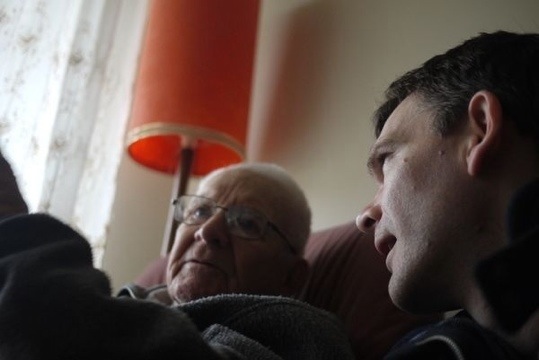
I took photos of my grandfather’s hands the last time I saw him.
I knew it might be the last time I’d see him, despite finding him in reasonably good shape for a 98-year-old recovering from pneumonia.

The clock was ticking on the energy in his body right down to his lung strength and the nerves in his fingers. (He had just burned them on a cup of tea.)
In the 98 years prior to this day, this man’s hands had achieved a lot.
His role at family events was often as videographer. In fact, he was obsessed with filming life. He even took a very early video camera across the Himalayas. It was shoulder-mounted, so, lucky for him, the Sherpa carried it.
He enjoyed finding new tasks and interests in a way I never have. I tell people that apart from the internet, I have no hobbies. But I have become obsessive about posting everyday moments on the iPhone app Instagram.
So, I think that following my grandfather’s death, looking for moments to capture may be one way my grandpa has changed me.
During one of the final walks I took with him around his endlessly intriguing Japanese rock garden, he told me that he had started creating dioramas. They were slightly kitsch but elaborate and often complicated scenes which involved plaster, paint, cement and miniature homes and residents often engaged in a cultural activity. Some were skiing in the alps, others were Chinamen fishing or even Japanese Geishas at a tea ceremony.
I asked him why he made them.
To pass the time, he said gruffly. “What else am I going to do?”
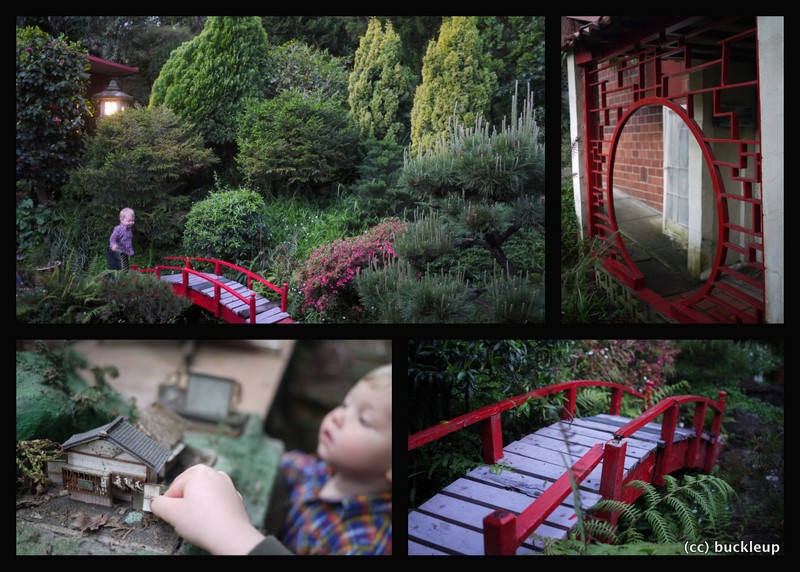
My grandfather's garden
“I’ve got to do something with my hands.”
And so he created a Mount Fuji, replete with miniature skiers, a village, a main street and a contemplation room for the locals.
I knew it to be a contemplation room – for traditional tea ceremonies – because he also created a full size one for himself in another part of the backyard.
I guess he also gardened to take up the time and to keep his fidgety hands busy.
It was his garden, with its countless bonsai plants, handcrafted waterfalls and ponds was a land of wonder for all his grandkids.
It has levels, layers, from skyscraping elm trees to crafted rock platforms and meditative corners.
The centerpiece was a red, hand-made wooden bridge over a fish pond into which a fountain cascaded from further up the yard.
We used to beg my grandfather to turn on the pump to get the fountain going. It travelled about five metres through crevices, under rocky tunnels and around shrubs.

Maybe my childhood fascination with this water feature explains why I spent two years getting a fountain in place at my home. It’s a pitiful replica of his remarkable creation but I got a sense of the satisfaction that you get when your own hands created something.
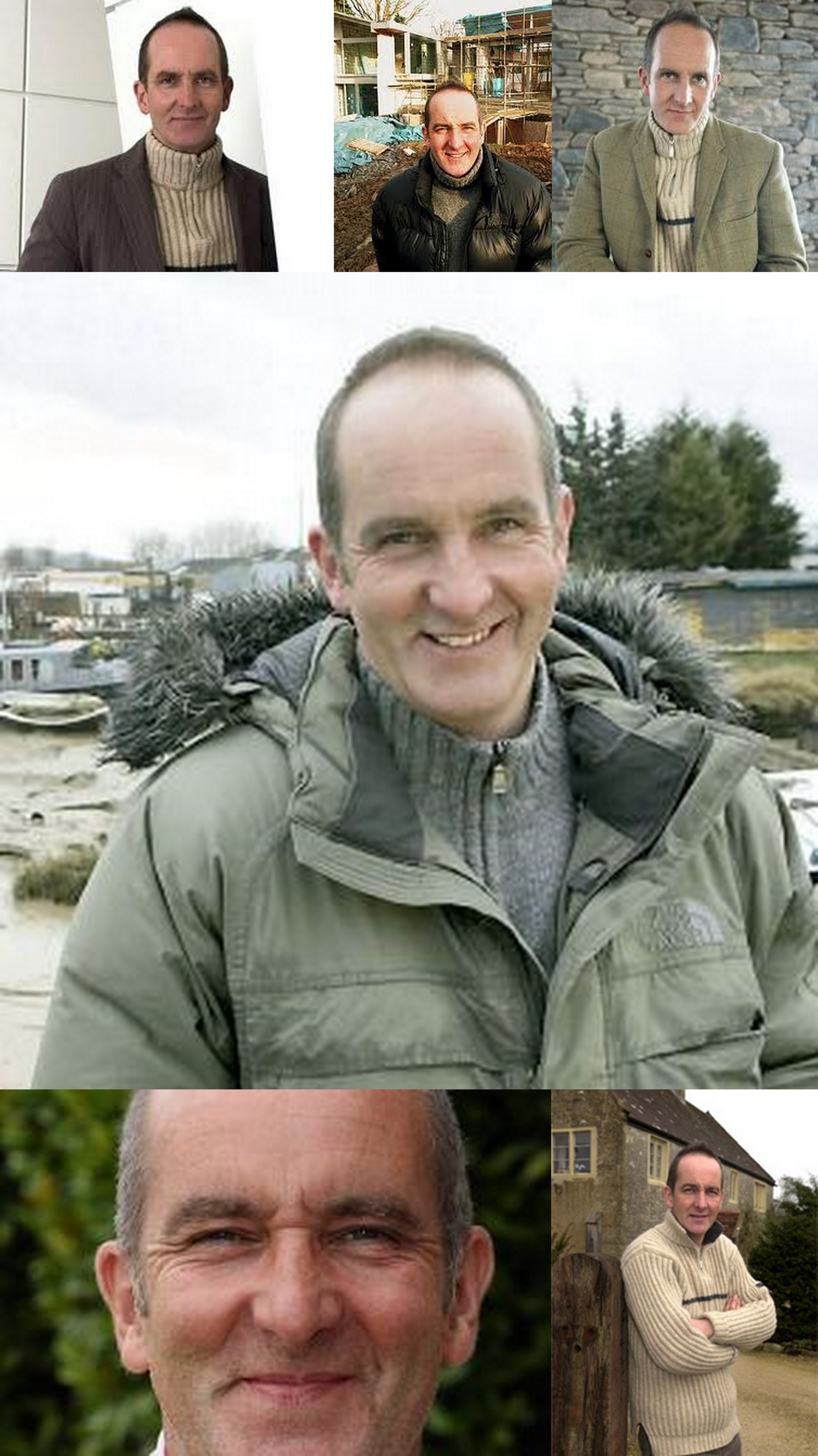
Grand Designs host Kevin McCloud has a special way of describing this feeling.
Kevin says that most people pursue ‘Dopamine’ hits. It’s a cerebral sensation that comes when you buy something and it feeds materialism’s hold on our lives. It’s immediate but it is temporary.
He prefers the joy of serotonin, that feeling you get when you complete a task you have worked at, it could be a house or a puzzle, the fulfillment of finding a new route or presenting a meal.
I think my grandfather understood this and devoted a majority of his time to seeking it out in new and increasingly creative ways.
I am going to take that lesson and apply it to my life – with the knowledge that creating with your hands can reach beyond personal satisfaction and, through family and relationships you nurture, it can even benefit others in a kind of shared, serendipitous joy.
Instagram – the only social network which rewards creativity with more followers – is my latest iPhone app addiction and may soon become essential for news junkies.
Where else could you get a photographic insight into presidential debate just minutes before it went LIVE to air.
Twitter, you say? Ah, but Instagram makes the photos the medium, not the caption, and you can search by tags, places or even GPS.
This enables me to instantly see who else and what else is being posted at a certain location, be in the Vatican City as the pope appears, an earthquake in Indonesia or at a protest in Time Square. Of course, it works locally too as more people join up and tag posts with your favourite cafe, park or club.
As I write this, #OccupyWallStreet has 6612 photos under that tag. Even #occupysydney has 130 (not including those added by me)
It’s also becoming a nice way to tap into the US presidential campaign.
Check out what @CNNSITROOM (Wolf Blitzer’s weekly political – The Situation Room forum on CNN) posted this morning….
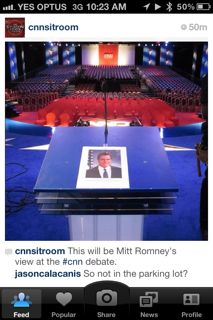
There is quality content here, and the feed keeps getting bigger, especially from US TV networks hitching a ride on this new photo-sharing app.
@TodayShow is leading the way starting hashtags for each musical act to join their concert series.
@Starbucks is offering deals if you follow their posted pics.
And despite a few big-name signups, Instagram is still largely under the radar.
Perhaps it’s because the media hasn’t been mentioning it on air. There have been no security breaches, and no epic milestones of users signed up (although it is pushing 7million users – not bad for just 4 employees) and that’d always a good time to join.
You know, before it was popular.
Part of the app’s appeal is that it makes real people the most popular when their skill has wide appeal. Meet the Top 15 Photographers – most of whom are relative nobodies until Instagram.
That said, here are a few familiar names and faces you will know if you sign up…
News
@nbcnews
@npr
@abcworldnews
@decision2012
@Time_magazine
@washingtonpost
Real Time Reporting
@cnnireiport
@breakingnews (AWOL? just a handful of posts)
@CNNPR
TV Shows
@sunriseon7 (of course)
@todayshow (NBC)
@GoodMorningAmerica
@MTV
@NatGeo
@MeetThePress
@BackStory

Tech news/views
@LeoLaporte
@Mashable
@Zuck (Mark Zuckerberg – only 3 photos)
@Jack – creator of Twitter Jack Dorsey
@evanwilliams – entrepreneur behind blogger & twitter
@bizstone – co-founder of twitter
Other Brands
@wikileaks
@YouTube
@RedBull
@Starbucks
@YouTube
@WeatherChannel
@BillboardDotCom
@generalElectric
@SXSW
@NASAgoddard
@VH1
@Burberry
@Gucci

Aussies
@maddogsullo – Eamon Sullivan
@adamboland
Celebs
@SnoopDogg
@jamieoliver
@TonyHawk
@justinbieber
@selenagomez
Posted in Apps, How To, Social Media, Tech
Posted in Uncategorized
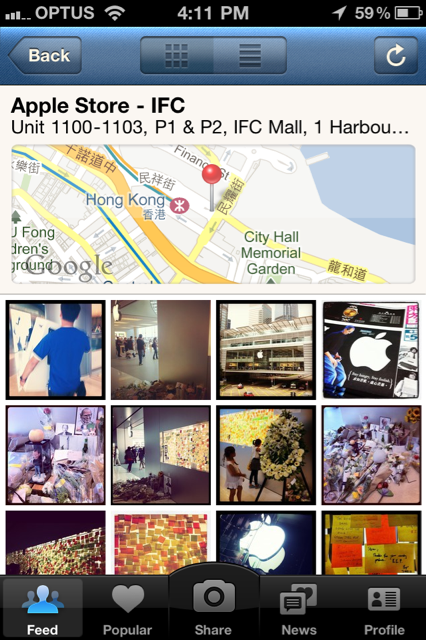
Instagram iPhone app shares photos and groups photos with others by location.
This makes it a fabulous social and fully open pictorial message board when events of any kind occur.
The tributes of an actual apple, a weird Steve figurine and a co-ordinated, colourful wall of post-it notes at Hong Kong Apple Store also shows how stylishly memorials can be.
If Instagram had been popular during the Christchurch earthquake or Queensland floods, for example, searching for photos by location could have been invaluable for sharing of realtime updates locally and globally.
The Steve Jobs memorials at Apple Stores worldwide show the sentiment shared worldwide is a more powerful force for showing people’s sameness across borders and cultures, our shared humanity… as long as it is searchable and easily viewed.





Posted in Uncategorized
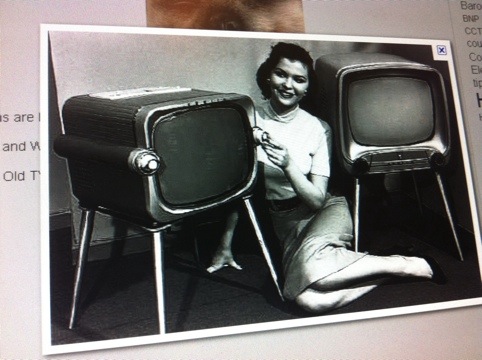
My recent experience of buying a new TV should have delivered me immense satisfaction and loads of testosterone as I made the biggest decision a married male can make on his own.
But somehow, my purchase of a Smart TV” left me feeling much dumber for it.
I work in TV but live most of my life online so in my humble opinion, my new “connected TV” should allow me to do both;
I want to tweet while I watch a show. I want to read my Facebook but keep streaming the news. I want also want to be able to browse the web using a keyboard and trackpad and it doesn’t seem ridiculous to me to expect a TV to be easily able to stream videos on my much smaller-screened Macbook.
But no. For the ten years since plasma TVs came out – and I have been biding my time – the best TV makers have developed is a pretty pixelated digital picture that is thinner and uses less energy.
3D-enabled or not? 50hz or 100hz? Internet-ready? Wifi-connected? What? Why??
Why are we way back here, deciding on small variations of nothingness when even the most sophisticated TV will still only deliver me a dodgy web browsing experience.
(Massive icons, a keypad on the remote with arrows to move the cursor around like a first generation Blackberry. And on most, you enter a URL using numbers like your first NOKIA in 1995!)
After visiting two or three stores, it became obvious that the coolest, $5000 LED-LCD TV won’t yet let me flick between websites, track tweets while I watch a show in the other part of the screen, post on Facebook while I continue watching my favourite show… you know, do what my notebook computer does.
When I went to university and completed my Applied Science in Information Studies, I knew the internet was going to change everything. But that’s all I knew. And the lecturers, who were clouded by years of teaching how information sharing worked the old way,had only just begun accepting essays via email.
TVs are now the librarians of old. The rusty Citroens choking up the info highway, delivering info as they always did and resisting new developments that threaten its mainstay.
It’s no wonder nearly 50% of teens now spend more time on their computers than watching TV. [citation coming]
Looks too me like televisions are an overheated area of glitzy marketing with pretty minimal delivery. There’s lots of jargon, stickers and selling points but I am getting a TV which does little more than the mournful, cumbersome CRT I now have sitting on my living room floor like an orphaned elephant. Yes, a white elephant.
Lucky for me, one clever thing my TV can do is turn itself off if it detects no movement in the room for thirty minutes.
And so far, to Sony’s credit, this has only occurred twice during my favourite show.
——-/——-
UPDATE!!
Unbelievable.
Now that I have finally received the WIFI dongle (which had to be transferred from another store) I find that the Sony WIDGETS work on my TV model and one is for Twitter!
This means I CAN have a twitter feed in the right of screen as the show – form any source – plays out on the left of screen. Joy of joys. And my apologies to Sony.
The interface is limited but hey, it’s all a step toward real social TV. Using Sony’s rather good iPhone app ‘Media Remote’ you can type and navigate the screen as good as one might hope.
Posted in Tech

Just noticed a company that does good work aggregating Tweets around localities has also begun showing the highest trending clubs/bars/cafes.
If they extend the archive and depth of related tweets, this could make for great peer-reviewed dining out.
Imagine a menu-log with up-to-date tweets or Travel Advisor built on honest opinions freely shared by everyday humans.
But, as this picture shows, businesses such as The Winery might develop a distaste of such an idea. All the more reason for it to work.
(And though Travel Advisor reviewers have faced law suits for poor reviews, who is going go to sue a tweep? Surely no one would ever!? But here are some tips to avoiding it…)
Posted in Social Media

 Buckleup's Blog